Crises don't respect organizational boundaries. Systems often do.

Blackouts, extreme weather, communication failures – crises take different forms. The operational challenge remains the same: quickly establishing a reliable operational picture and making decisions under time pressure.
Disasters bring together organizations that largely operate independently in their day-to-day work. Fire departments, police, the German Federal Agency for Technical Relief (Technisches Hilfswerk, or THW), the Bundeswehr (Germany‘s armed forces), relief organizations, energy providers, and other agencies all have their own tasks, responsibilities, and specialized systems. This all makes sense – until a situation arises that can no longer be managed within these boundaries.
During a widespread power outage, for example, very different questions need to be answered within a short time: Which facilities are affected? Which generators are available? Where is emergency power supply insufficient? Which transport or communication routes are disrupted? Which measures are already underway? And who is coordinating them?
For me, situations like these reveal the fundamental challenge of disaster response: Information from numerous individual systems must come together to form a shared operational picture that enables coordinated action across organizations.
Diversity of systems isn’t the problem
Requiring everyone involved to use a single system cannot be the answer. A fire department has different requirements from an energy provider or a police authority. Applications developed and refined over many years serve specific purposes and contain knowledge, processes, and functions that cannot simply be replaced.
In my experience, the real gap lies between these systems. When information is only available within individual organizations, different perspectives on the same situation emerge. Data has to be passed on by phone, email, or other communication channels and then reassessed. Under time pressure, this costs valuable time and increases the risk of organizations working with different levels of information.
What is missing is a shared operational layer that connects existing systems. Such a platform must be vendor-agnostic and capable of integrating different applications. Existing systems remain in place. What matters is not which technology an organization uses internally, but whether the information needed for a shared operational picture is available where it is required.
A shared operational picture isn't enough
But this only solves part of the challenge. Bringing information together and displaying it on a single interface does not automatically create coordinated operational command. An operational picture only delivers value when it leads to decisions and action.
Who needs which information? Who prioritizes resources? Who decides where mobile emergency generators should be deployed, for example? Which measure takes priority when several critical facilities need support at the same time? How does a decision affect other organizations?
Different systems – One shared operational layer
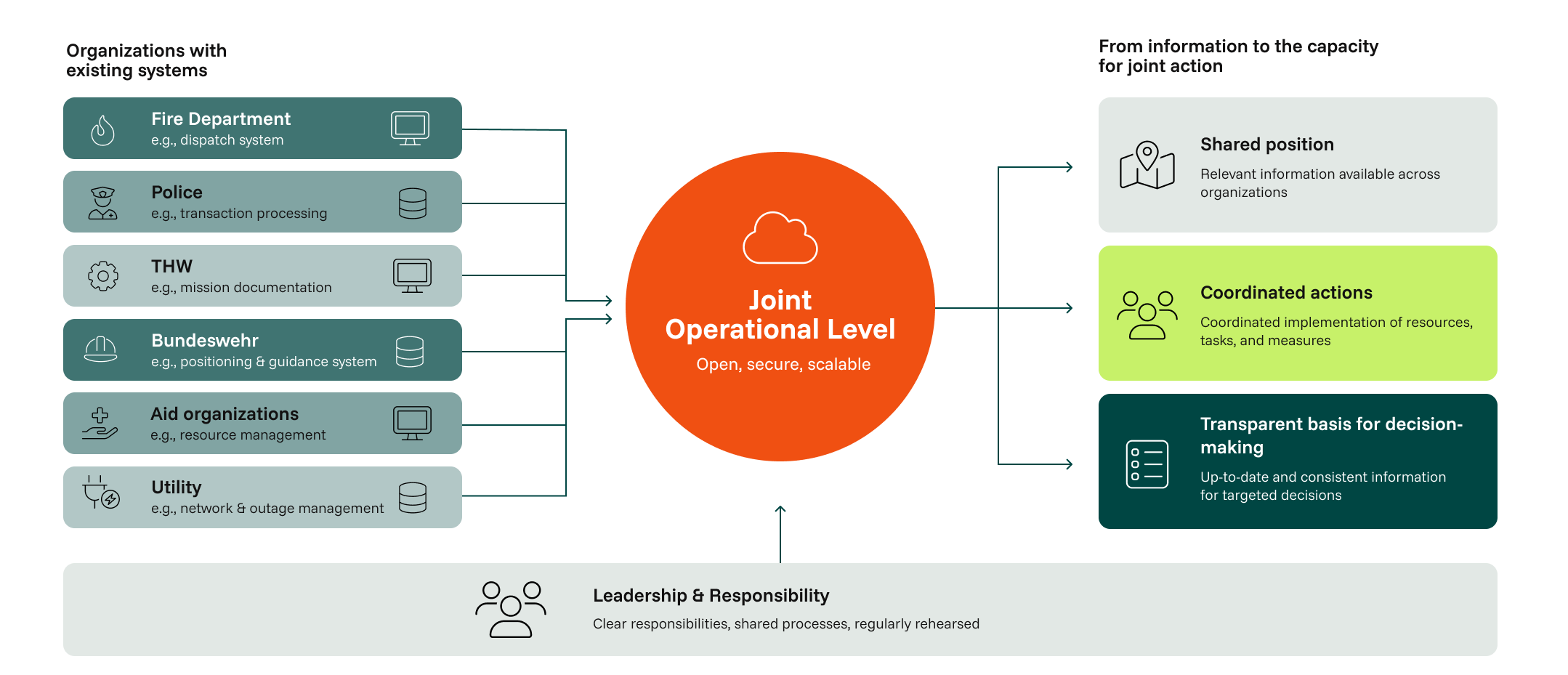
A shared platform must therefore do more than enable data exchange. It must support the entire process, from gathering information and assessing the situation to coordinating action.
This also means accommodating different roles and responsibilities. Not everyone needs the same view, and not every organization has the authority to make the same decisions. The technical environment must support these differences while ensuring that everyone works from a consistent operational picture.
Someone needs to take the lead
The more complex a situation becomes, the more important another question becomes: Who is in command? Organizations can continue to carry out their respective tasks independently. But overall coordination requires a clear definition of which authority leads the response, assesses information, sets priorities, and coordinates measures across organizations.
This leadership role cannot be decided only when a crisis occurs. The technical architecture must also be prepared for it. Whoever is in command needs a continuous overview of the shared operational picture: Which incidents have occurred, which resources are available, which measures have already been initiated, and where new bottlenecks or dependencies are emerging.
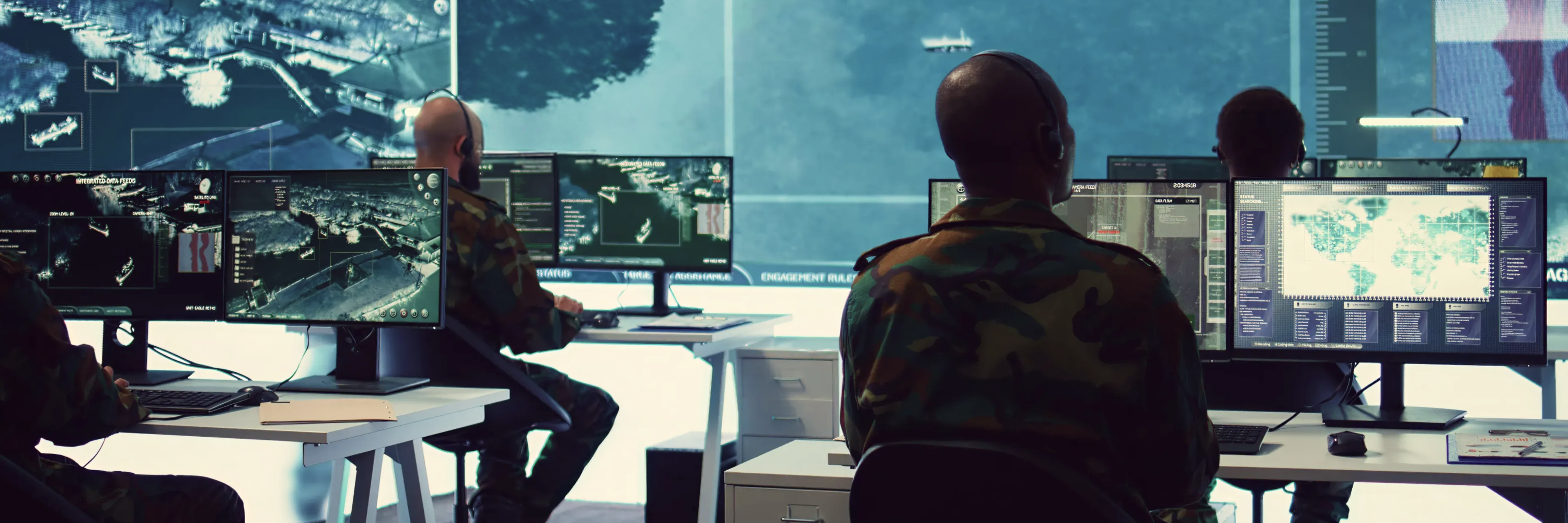
The role of modern control centers therefore goes far beyond consolidating information and communication channels. They must provide an environment in which complex situations can be managed and coordinated action can be directed.
Prepare for a crisis before it happens
From numerous projects, I know that technology and clearly defined responsibilities alone are not enough. Whether collaboration actually works can only be assessed when the entire process is put to the test. Relevant emergency scenarios must therefore be rehearsed regularly and under conditions that are as realistic as possible.
This involves much more than testing technical functionality. What happens when individual communication channels fail? Is information still available? Do handovers between organizations work? Are roles and escalation paths clearly defined? Can resources be coordinated across organizations? Does the shared operational picture remain reliably available even under heavy demand?
Such exercises reveal not only whether individual systems work, but whether they work together. This requires defined scenarios and a clear schedule for regularly testing relevant crisis situations. The findings from these exercises must then feed back into processes, architecture, and responsibilities.
Resilience must be tested regularly: Systems, processes, and responsibilities are tested together and continuously improved based on the results.
Coordinated action instead of technical standardization
Disaster response therefore does not need one system for everyone. What it needs is a shared operational layer that connects different systems and organizations without compromising their independence. It must make information available where decisions are made, support clear command structures, and cover the entire operational response process.
In a crisis, numerous individual systems, responsibilities, and organizations must come together to create a shared operational picture and enable coordinated action. Technology, processes, and command structures must be prepared for exactly that.
From my perspective, this is where the work of a systems integration partner comes in: connecting existing systems, bringing information flows together, and aligning the technical environment with command and operational processes.
Explore more