Dynamic Media
Facility (DMF)

Why media infrastructures must evolve
Modern media operations require infrastructures that can adapt continuously to new workflows, platforms, and production demands. Traditional architectures built around fixed capacities and tightly connected systems make it increasingly difficult to scale efficiently and respond to change.
The Dynamic Media Facility (DMF) provides the framework for this shift. We help broadcasters and media organizations define their DMF strategy and implement scalable architectures across cloud, on-prem, and hybrid environments.
By moving to modular, orchestrated platforms, media functions can be deployed, integrated, and scaled more flexibly across distributed infrastructures. This creates the foundation for more efficient operations, faster innovation cycles, and long-term adaptability in an evolving media landscape.
Optimize your media operations with the Dynamic Media Facility
Flexibility without constraints
Run media workloads wherever they deliver the most value across cloud, on-prem, or hybrid environments without being tied to a single infrastructure.
Efficiency that impacts cost
Allocate resources dynamically and increase utilization, reducing overprovisioning and improving cost transparency.
Speed that drives competitiveness
Launch and adapt workflows, services, and formats faster to respond to changing market demands.
Open ecosystems instead of lock-in
Integrate solutions across vendors and maintain full control over your architecture and technology stack.
Operational resilience at scale
Ensure high availability and reliability across distributed environments with built-in redundancy and automated failover mechanisms.
Continuous evolution
Evolve your platform step by step and replace rigid project cycles with continuous improvement.
What is the Dynamic Media Facility?
The Dynamic Media Facility is a reference architecture for software-defined media infrastructures. It defines how modern media workflows are built, deployed, and operated.
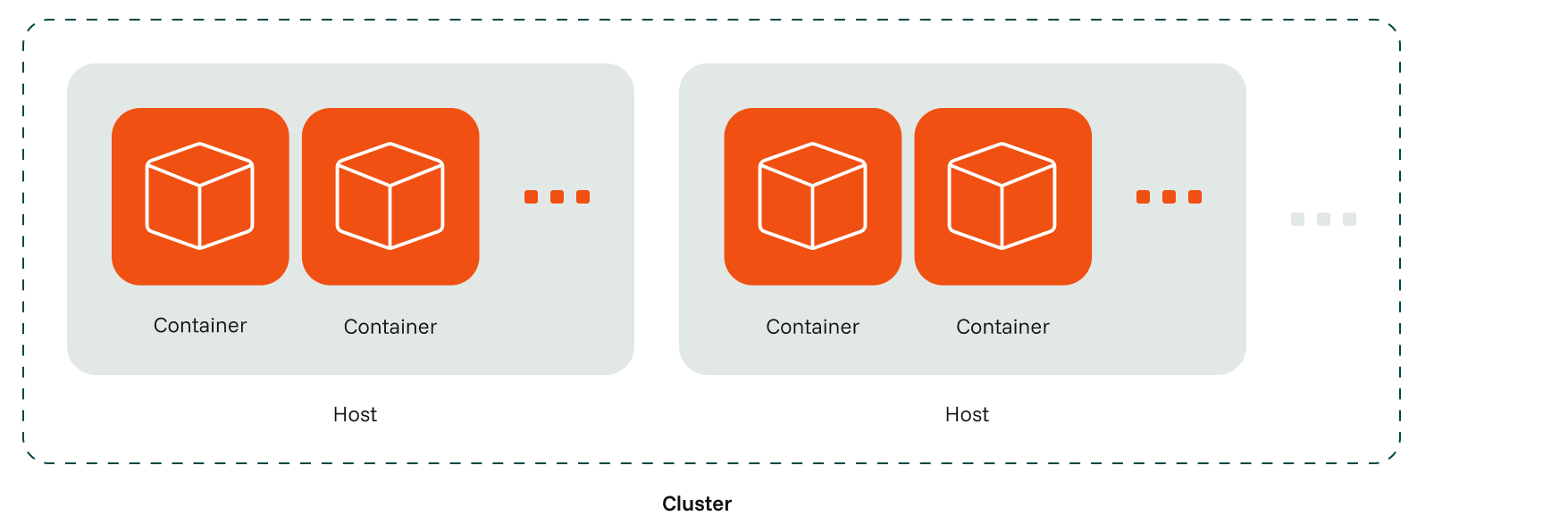
Instead of fixed systems, DMF introduces modular, containerized media functions that run on orchestrated platforms such as Kubernetes. These functions are decoupled from hardware and can be deployed consistently across cloud, on-prem, and hybrid environments.
This creates a unified platform where infrastructure and applications operate independently, enabling greater flexibility and interoperability across vendors and systems.
From architecture to workflow orchestration
This architectural shift becomes tangible at the workflow level. Instead of fixed processing chains, media functions are orchestrated dynamically across a shared platform.
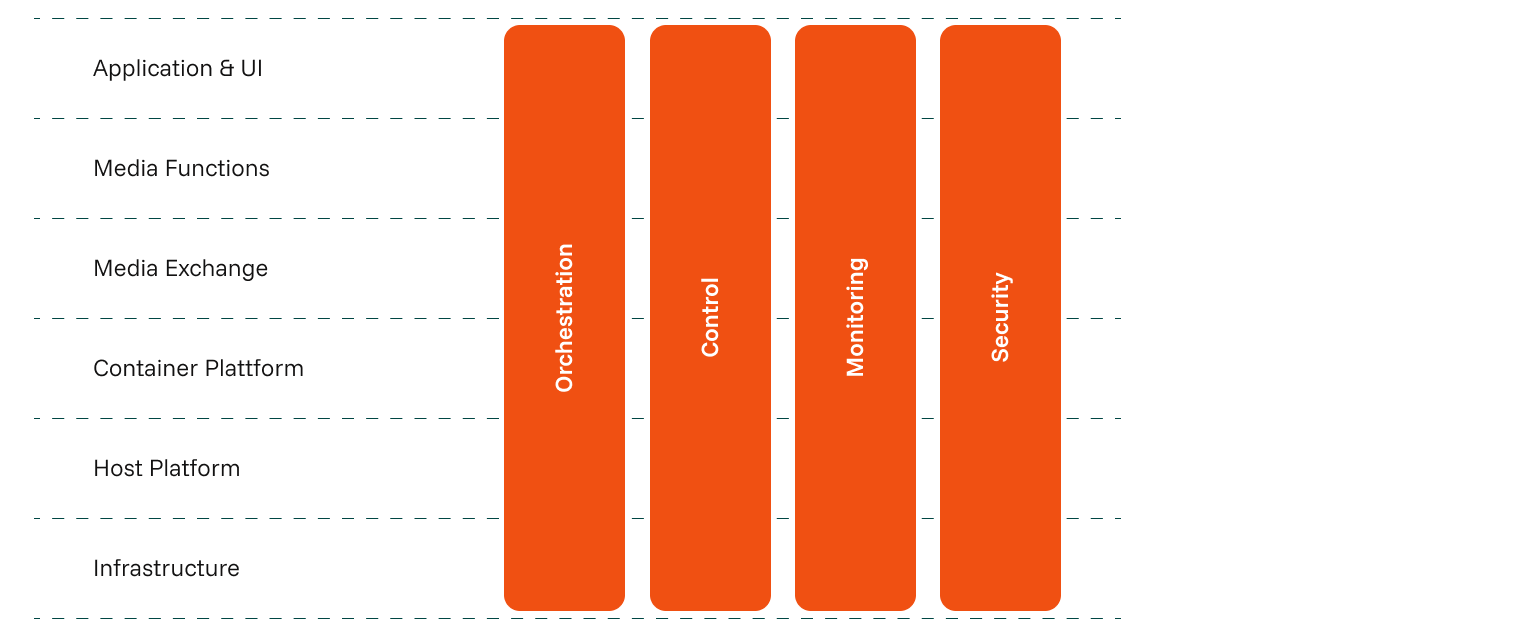
Media functions can be deployed, scaled, and combined dynamically, independent of hardware, location, or vendor. Workflows are no longer defined by static connections, but by flexible orchestration logic that adapts to changing requirements.
Distributed production environments across cloud, on-prem, and hybrid setups become possible. Workflows gain flexibility, iteration cycles accelerate, and integration across ecosystems becomes significantly easier.
Our Dynamic Media Facility service portfolio
Shape your Dynamic Media Facility based on your business goals, workflows, and operational requirements. Our expertise supports every stage of your transformation, from strategy to scalable operations.
Strategy and architecture
Define a clear target architecture aligned with your current environment and future ambitions. Requirements translate into a scalable, vendor-agnostic design.
Implementation and integration
Build your platform across cloud, hybrid, or on-prem environments. Integrate workflows into a unified, orchestrated system that operates seamlessly.
Custom development and DevOps
Extend and adapt media functions, establish CI/CD pipelines, and enable software-defined operations across your organization.
Operations and optimization
Ensure stable, efficient operations with monitoring, automation, and cost control, supported by Managed Services where needed.
How DMF implementation becomes reality
Existing workflows, infrastructure, and operating models are analyzed to identify bottlenecks and define clear starting points.
A target architecture is defined based on DMF principles, aligned with business requirements and operational goals.
The platform is implemented and integrated using cloud-based technologies, containerization, and infrastructure as code.
Stable and scalable operations are established with monitoring, automation, and clearly defined processes.
Performance, cost, and workflows are continuously refined to keep the platform aligned with evolving demands.
Latest insights








Working for the best – Some of our customers





























Start your Dynamic Media Facility implementation
A successful transformation starts with clarity.
Assess your current workflows, evaluate readiness for software-defined architectures and containerization, and define a realistic transformation path. This creates a solid foundation for informed decisions and sustainable progress.
Our memberships